STEP ONE
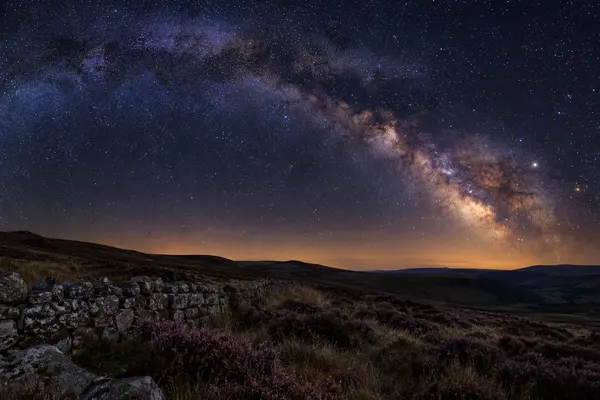
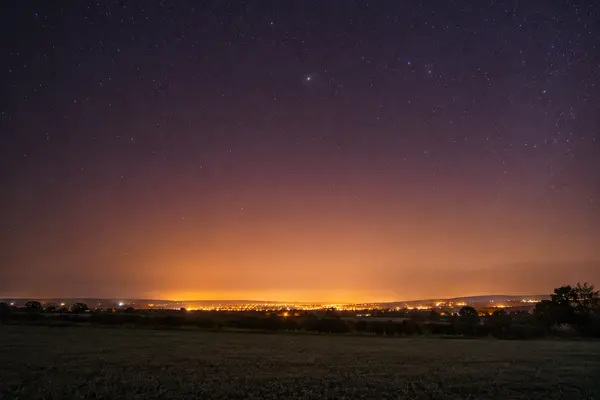
Get away from the glow
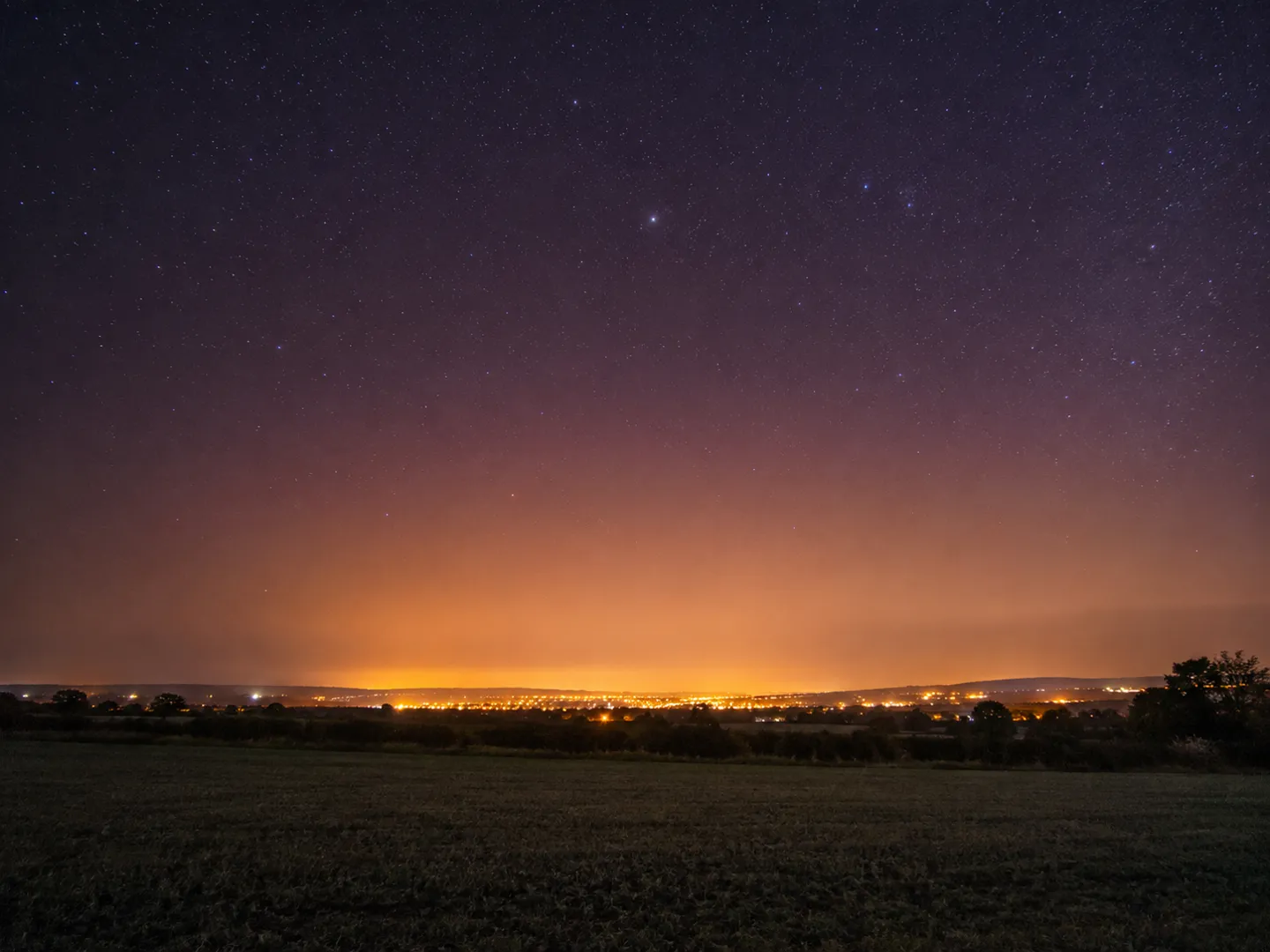
In the 2023 Star Count, half of participants were under skies CPRE calls severely light-polluted.
Check your sky doodlegalaxy
Start
A NAKED-EYE GUIDE
You live inside one galaxy and can see another. No telescope needed.
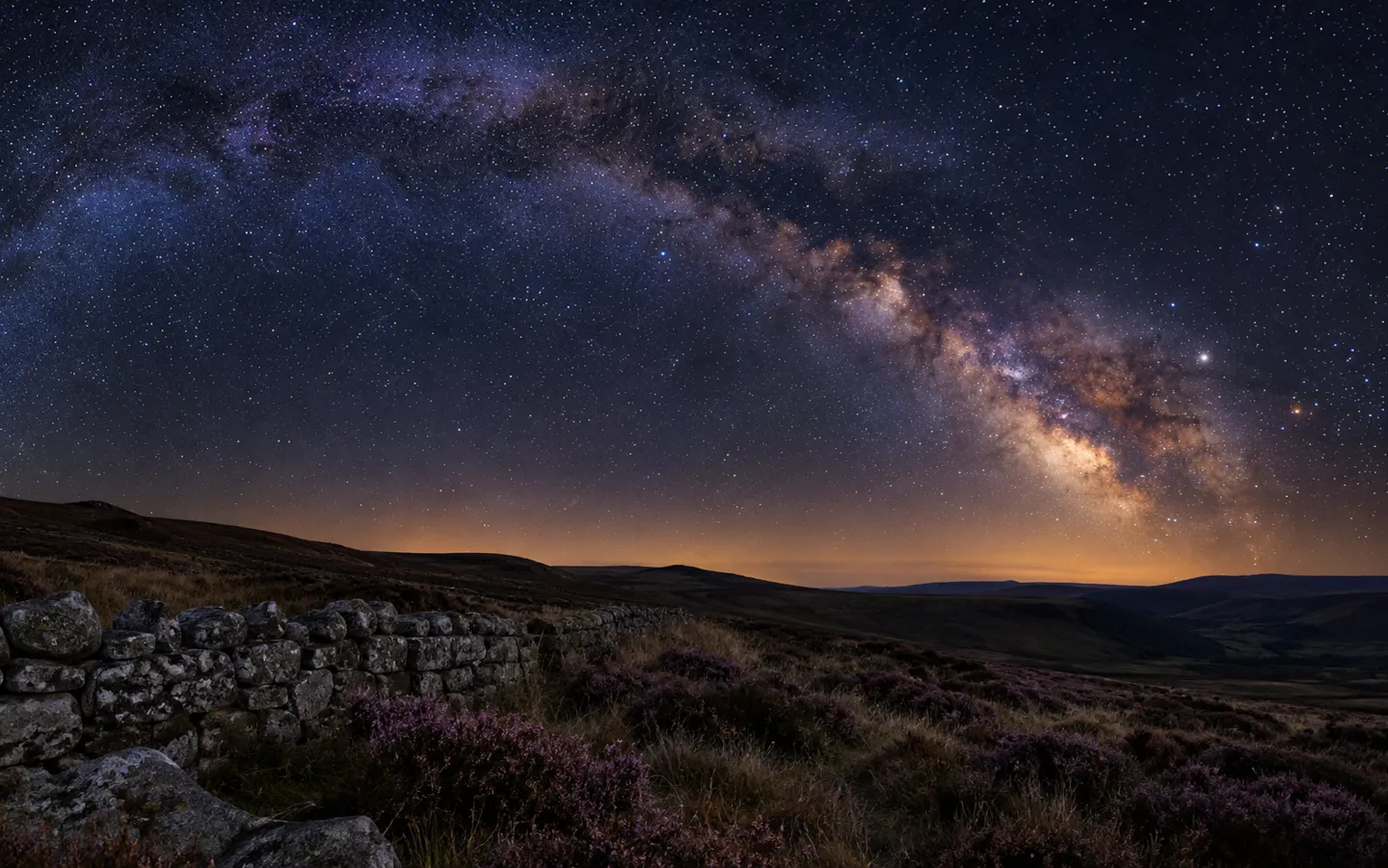
The pale band of the Milky Way is our own galaxy seen from the inside, and the faint smudge of Andromeda is the farthest thing most people can see by eye. Both need a dark sky and patient eyes. Here is what the sources say, in plain English.
Plain English, with the sources linked.
LOOK UPlet your eyes adjust
Check how dark your sky isKeep in mind
THE SHORT ANSWER
Most of the work is getting away from light,
then waiting for your eyes to catch up.
STEP ONE
In the 2023 Star Count, half of participants were under skies CPRE calls severely light-polluted.
Check your skySTEP TWO
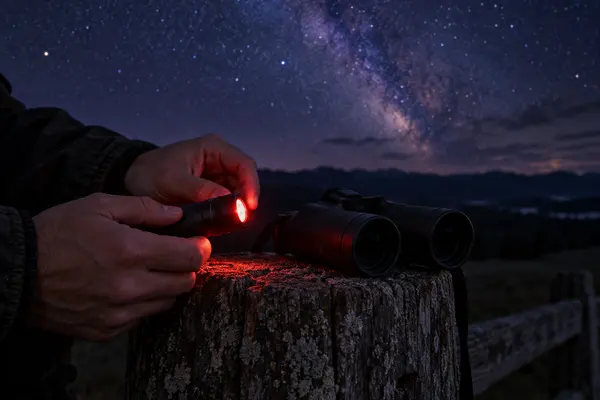
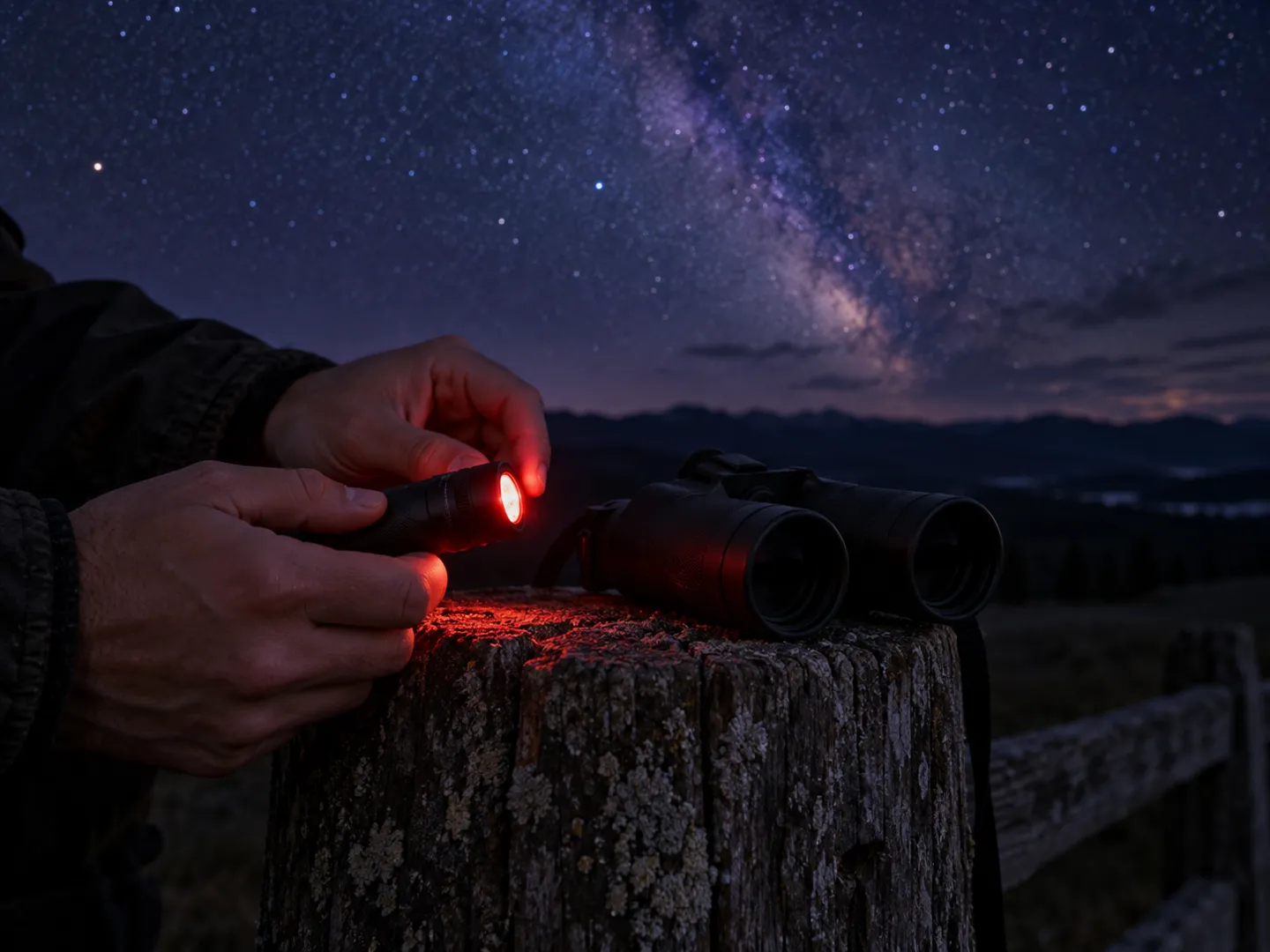
Night vision takes 20 to 40 minutes to build, and seconds of bright light undo it. Use a dim red light.
Plan a night outSTEP THREE
The Milky Way's band, and Andromeda: a faint patch of light 2.5 million light-years away.
How far is that?A QUICK SKY CHECK
On a clear winter evening, find Orion and count the stars you can see inside the box of its four corner stars. CPRE's Star Count uses this count to grade light pollution.
Pick your count to see which band you are in and what share of 2023 counters were there with you. One count on one night is a rough guide, not a measurement.
TWO GALAXIES, TWO SCALES
Light from the band overhead left within our galaxy.
Light from Andromeda set off long before.
100,000 light-years
Across our own galaxy
The Sun sits about 28,000 light-years from the galaxy's centre and takes about 230 million years to make one orbit. The band you see is the disc of the galaxy seen edge-on from inside it.
THE MILKY WAY · NASA
2.5 million light-years
Distance to our big neighbour
StarDate, from the University of Texas McDonald Observatory, calls Andromeda the farthest object easily visible to the eye alone. From a dark site it shows as a faint patch of light.
ANDROMEDA · STARDATE
Light-years measure distance, not time, but the light reaching you from Andromeda tonight has been travelling for about 2.5 million years.
PLAN A NIGHT OUT
Step 1
Moonlight washes out faint light just as streetlights do. Check the forecast and the Moon's phase before you go.
Step 2
A protected dark sky park or reserve, or any spot well away from town lights, gives the band of the Milky Way a chance.
Step 3
Put the phone away and let your eyes adjust. Faint detail keeps appearing for half an hour or more.
Step 4
A dim red torch helps you find your footing without undoing the night vision you have just built up.
GALAXY FACTS
NASA puts the Milky Way's diameter at about 100,000 light-years, with the Sun some 28,000 light-years from the centre.
NASA says the Sun takes about 230 million years to complete one orbit of the galaxy, despite moving very fast.
In CPRE's 2023 Star Count, 51% of participants saw 10 or fewer stars in Orion. Only 5% saw more than 30, a truly dark sky.
The National Park Service says it takes 20 to 40 minutes to benefit from the eye's night-vision pigment, and only seconds of bright light to break it down.
Galloway Forest Park became a Dark Sky Park in 2009, among the first in Europe. Exmoor became Europe's first International Dark Sky Reserve in 2011.
QUICK QUESTIONS
Short answers to the questions people ask most.
Yes, from a dark site on a clear, moonless night. It is hidden by light pollution in most towns: in CPRE’s 2023 Star Count, 51% of participants could see 10 or fewer stars in Orion, the band it calls severe light pollution.
About 2.5 million light-years. StarDate, from the University of Texas McDonald Observatory, calls it the farthest object easily visible to the eye alone. Under dark skies it looks like a faint, fuzzy patch of light.
Your pupils open fully within a few minutes, but the US National Park Service says the light-sensitive pigment in your eyes takes 20 to 40 minutes before you start to benefit from it. A few seconds of bright light undoes it.
The National Park Service explains that deep red light does not break down the pigment your eyes use for night vision the way bright white light does. Even red light contains other wavelengths, so a dim red light is best.
Protected dark sky places are a good start. Galloway Forest Park in Scotland was named a Dark Sky Park in 2009, among the first in Europe, and Exmoor became Europe’s first International Dark Sky Reserve in 2011.
Destination
Updated
A NAME WITH ROOM TO GROW
doodlegalaxy.com is part of the DoodleSale portfolio. It isn't in an auction right now, but you can ask about leasing it.